Located in Southeast Sulawesi within Wakatobi National Park, diving in Wakatobi offers an unparalleled underwater experience. With over 40 accessible dive sites, crystal-clear visibility, and extraordinary biodiversity, Wakatobi is considered one of the world’s premier dive destinations. Its ecosystems often exceed 20–60 meters visibility with warm water temperatures around 29 °C, making every dive a vivid adventure
Why Wakatobi Stands Out for Divers
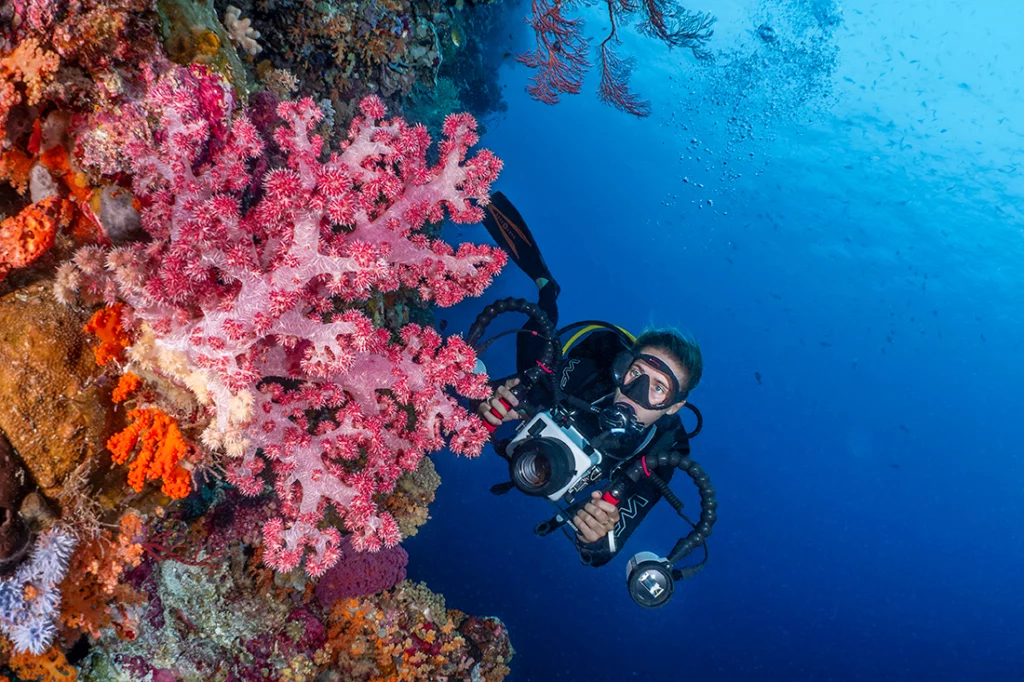
Wakatobi resides at the heart of the Coral Triangle a global biodiversity hotspot. The protected waters around its islands Wangi‑Wangi, Kaledupa, Tomia, and Binongko harbor an astounding 750 coral species and approximately 942 reef fish species, compared to fewer than 70 coral species in the Caribbean. Countless rare creatures like pygmy seahorses, frogfish, ornate ghost pipefish, mandarin fish, and various octopus species make this region a diver’s dream.
Jacques Cousteau famously described the region as “Underwater Nirvana.” The underwater terrain is equally compelling: steep walls, ridges, seagrass meadows, and gently sloping reefs offer varied dive profiles. Starting points often just markers on a continuous reef highlight features such as unique topography or biodiversity hotspots.
Wakatobi is also renowned for its House Reef accessible directly from the resort. Composed of seagrass beds, coral ridges, and drop-off zones, it provides nearly unlimited shore diving. With a taxi-boat shuttle, divers can drift over more remote areas of the house reef comfortably and safely.
Conservation and Technology-Driven Reef Protection

Wakatobi’s prestige is founded on strong pioneering conservation efforts. Its protected marine preserve spans more than 20 kilometers of reef, operating under a Collaborative Reef Conservation Program. Since 2024, the in-house marine biologist Julia Mellers has led the Reef Health Assessment initiative, using ecological tools and artificial intelligence to monitor reef vitality and support restoration.
Divers often participate in reef monitoring, including photogrammetry or eDNA sampling. These contributions support scientific research while providing educational insights. AI analyzes submerged photo surveys to map coral coverage and detect species changes. This helps demonstrate the effectiveness of conservation and confirms that Wakatobi’s protections buffer the reef from global bleaching threats.
Weather and ocean sensors monitor sunlight-driven fluctuations in reef metabolism in real-time. This technology-driven approach ensures dive experiences remain sustainable and scientifically informed.
Dive Experiences: Real-World Examples
Cornucopia: Multi-Level Wall Diving
At Cornucopia, divers explore vertical walls with ledges and overhangs, offering a perfect setting for multi-level dive profiles. With a dive computer, divers can safely explore drop-offs and reef crests. The site is vibrant with colorful soft corals, fans, and reef fish communities, ideal for photographers and experienced explorers.
House Reef Macro Gardens
The House Reef is a macro diver’s paradise. From small frogfish to nudibranchs, shrimp, seahorses, and juvenile species every dive reveals new tiny wonders. It’s also suitable for snorkelers and beginners exploring reef zones without venturing far from shore.
Night Fluorescence Dives
At night, Wakatobi’s guided fluorescence dives reveal a hidden side of coral life. Under fluorescent lighting, reefs glow with vivid neon patterns making visible biological processes that are invisible during the day. It offers a compelling scientific and visual experience.
Conservation Partner Monitoring
Guided reef survey dives allow guests to work alongside scientists to collect visual and DNA data. Participants learn reef identification, survey techniques, and ecosystem health assessment merging tourism with real scientific contribution.
Benefits of Diving Wakatobi
Divers choose Wakatobi for unmatched reef biodiversity, stable conditions, and thriving ecosystems. The clarity often exceeding 60 meters supports vivid photography and excellent low-light visibility. Protected marine zones result in vibrant coral cover and high biomass, including endangered and rare species.
Technology integration enhances safety and engagement. Modern dive computers enable multi-level profiling. AI-powered reef imaging, eDNA analysis, and in-water sensors contribute to a scientific ecosystem. Divers receive both adventure and insight.
Service is another hallmark: knowledgeable guides with local reef expertise, dive boats ready for deeper site access, and the convenience of shore dives from the resort. Whether exploring walls or snorkeling, the experience is comfortable and seamless.
How Diving Wakatobi Solves Key Needs
Enhancing Marine Biology Education and Research

Use Case: Marine biology students and researchers require a biodiverse and accessible location to observe species behavior, coral health, and reef ecosystems.
Why Wakatobi Helps: With over 750 coral species and 900 fish species, Wakatobi functions as a natural marine laboratory. Researchers can conduct long-term ecological studies, test conservation models, and gather baseline data for tropical reef health. The site’s consistent visibility and established conservation zones make it safe and efficient for fieldwork.
Example: University-led research teams from Australia and Europe frequently use Wakatobi as a base to study coral bleaching resistance due to its relatively undisturbed environment.
Supporting Eco-Conscious Travel and Sustainable Tourism
Use Case: Travelers want to support destinations that contribute positively to the environment and local communities while enjoying unique experiences.
Why Wakatobi Helps: The Collaborative Reef Conservation Program links diving activities with direct financial support to local communities and reef protection. Visitors enjoy world-class diving while knowing their stay contributes to marine sustainability, local employment, and reef monitoring efforts.
Example: Wakatobi Dive Resort reports that a portion of each guest’s stay supports patrolling no-take zones and training local reef stewards, making each dive part of a larger impact.
Providing Therapeutic and Mental Health Benefits
Use Case: Professionals, creatives, and individuals suffering from stress or burnout seek natural escapes that support mental well-being and reconnection with nature.
Why Wakatobi Helps:
The serene underwater world of Wakatobi, with its crystal-clear waters, colorful marine life, and slow-paced diving experience, offers a meditative effect. The absence of noise, gravity, and technology overload allows divers to enter a state of mindfulness.
Example: A 2024 wellness retreat integrated diving in Wakatobi into a mental detox program for creative professionals, with participants reporting improved focus and reduced anxiety after five days of diving.
Enabling Underwater Photography and Videography Projects
Use Case: Underwater content creators and filmmakers need visually stunning, undisturbed marine environments with high biodiversity and great visibility.
Why Wakatobi Helps:
The coral density, vibrant reef fish, and frequent encounters with rare species make it an ideal location for professional underwater photography and videography. The reef’s layout also allows for great lighting and composition angles even for intermediate divers.
Example: Wildlife filmmakers have shot segments of reef documentaries for international networks like National Geographic and BBC Blue Planet right in Wakatobi due to its exceptional underwater scenery.
Training Ground for Advanced Diving Skills

Use Case: Intermediate divers looking to improve buoyancy, navigation, or marine ID skills need a controlled yet stimulating environment.
Why Wakatobi Helps:
With varied topographies walls, slopes, ridges, and seagrass beds plus consistently calm conditions, Wakatobi offers a safe and rich setting for skill advancement. Guided dives, educational briefings, and in-water feedback help divers develop without stress.
Example: Dive instructors from Europe and Asia often choose Wakatobi for specialty course certifications such as underwater naturalist, peak performance buoyancy, and night diving.
Frequently Asked Questions (FAQ)
1. Who is diving Wakatobi suitable for?
Diving Wakatobi appeals to all levels. Beginner-certified divers and snorkelers can enjoy diverse life right at the house reef. Experienced divers can explore deeper walls and remote submerged formations, safely supported by dive computers and expert guides.
2. What makes Wakatobi’s reef ecosystem exceptional?
Located in the Coral Triangle and inside a UNESCO Biosphere Reserve, Wakatobi contains roughly 750 coral species and nearly 950 fish species. Its protected zones, monitoring programs, and minimal human disturbance maintain exceptional reef conditions and biodiversity.
3. Are solo or night dives offered?
Yes. Solo divers with certification and proper gear can request permits under controlled safety protocols. Night diving with fluorescence lighting is offered several times weekly, providing a unique window into hidden reef life.